660nm vs 850nm: which wavelength does what
One you can see and one you cannot. The difference is depth, and it decides whether a wrap is any use on a joint.
660nm: the visible red
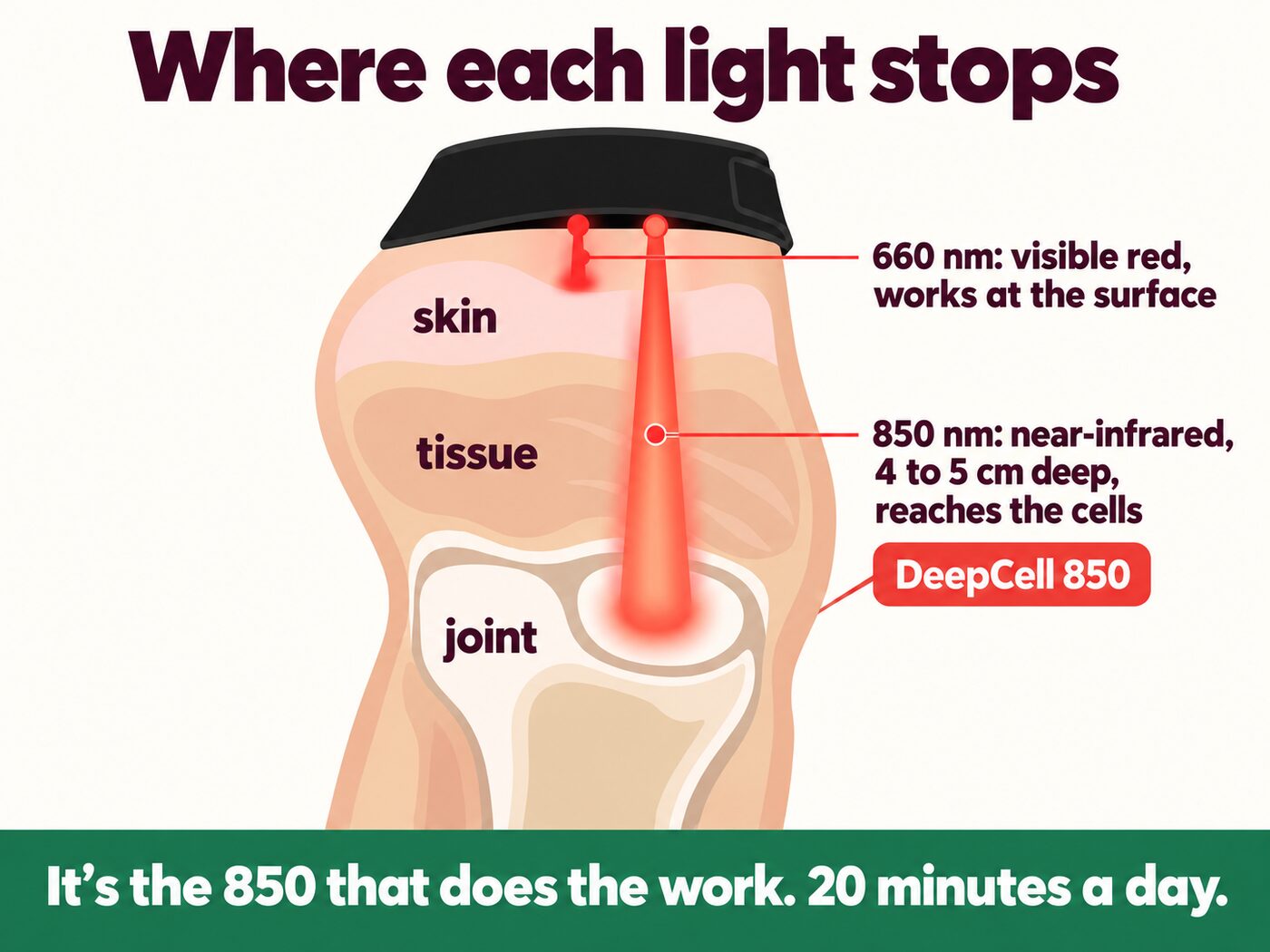
660nm sits at the deep-red end of what your eye can see. It is absorbed within the first few millimetres of tissue, which makes it the wavelength associated with skin: tone, texture, superficial soreness. It is also the wavelength that makes a wrap look like it is doing something, because the whole panel glows.
850nm: the near-infrared
850nm is just past the edge of human vision, so the lights look dark even while they are on. It scatters less on the way in and reaches roughly 4 to 5cm — through skin and fat and into the muscle, tendon and tissue surrounding a joint. If your complaint is an aching knee rather than dry skin, this is the wavelength that matters.
Why a good wrap runs both
Depth is not the only variable. A sore knee usually involves the surface tissue as well as the joint, and running both wavelengths covers the full thickness rather than betting on one layer. It costs more to build a panel with two LED types, which is exactly why budget belts tend to ship 660nm alone.
How to check what you are buying
- If the listing says “red light” with no numbers, assume 660nm only.
- If it lists 850nm but not 660nm, it is a near-infrared pad — fine for depth, nothing at the surface.
- If it lists both, look for whether they run together or as separate modes you have to alternate between.
LumaWrap runs 660nm and 850nm simultaneously for the whole 20-minute session. That is the “dual-depth” part of the name. See what LumaWrap is or how to compare belts on sale in the UK.
Common questions
What is the difference between 660nm and 850nm?+
660nm is visible red light that works at the skin and the tissue just beneath it. 850nm is invisible near-infrared light that penetrates roughly 4 to 5cm, deep enough to reach tissue around a joint.
Is 850nm better than 660nm?+
Neither is better; they do different jobs. For skin, 660nm is the relevant one. For a deep joint or muscle ache, 850nm is the one doing the work. Running both covers the surface and the depth.
Why can I not see the 850nm lights?+
850nm sits just beyond the range of human vision. On LumaWrap you see the red 660nm glow while the near-infrared runs alongside it invisibly.