
The short answer
If you want quick comfort today, a heat pad or a gel from the pharmacy is the simplest start. If you want a hands-free daily habit you can try for several weeks at home, red and near-infrared light is an option worth considering. If your pain is severe, sudden or getting worse, none of these replaces a GP appointment.
All the options side by side
| Option | Typical cost | Effort | What it offers |
|---|---|---|---|
| Pain-relief gel | A few pounds a tube | Rub in; quick to feel | Short-term comfort; ask your pharmacist |
| Heat pad / hot water bottle | Usually under £40 | Warm up, place on the area | Soothing warmth on the surface |
| TENS machine | Roughly £25 to £80 | Stick-on pads, pulses | Used during painful spells |
| Cheap red light belt | Often under £60 | Varies — check the details | Often one wavelength, short cover |
| Clinic light sessions | Charged per visit | Travel and booking | A trained person, but repeat costs |
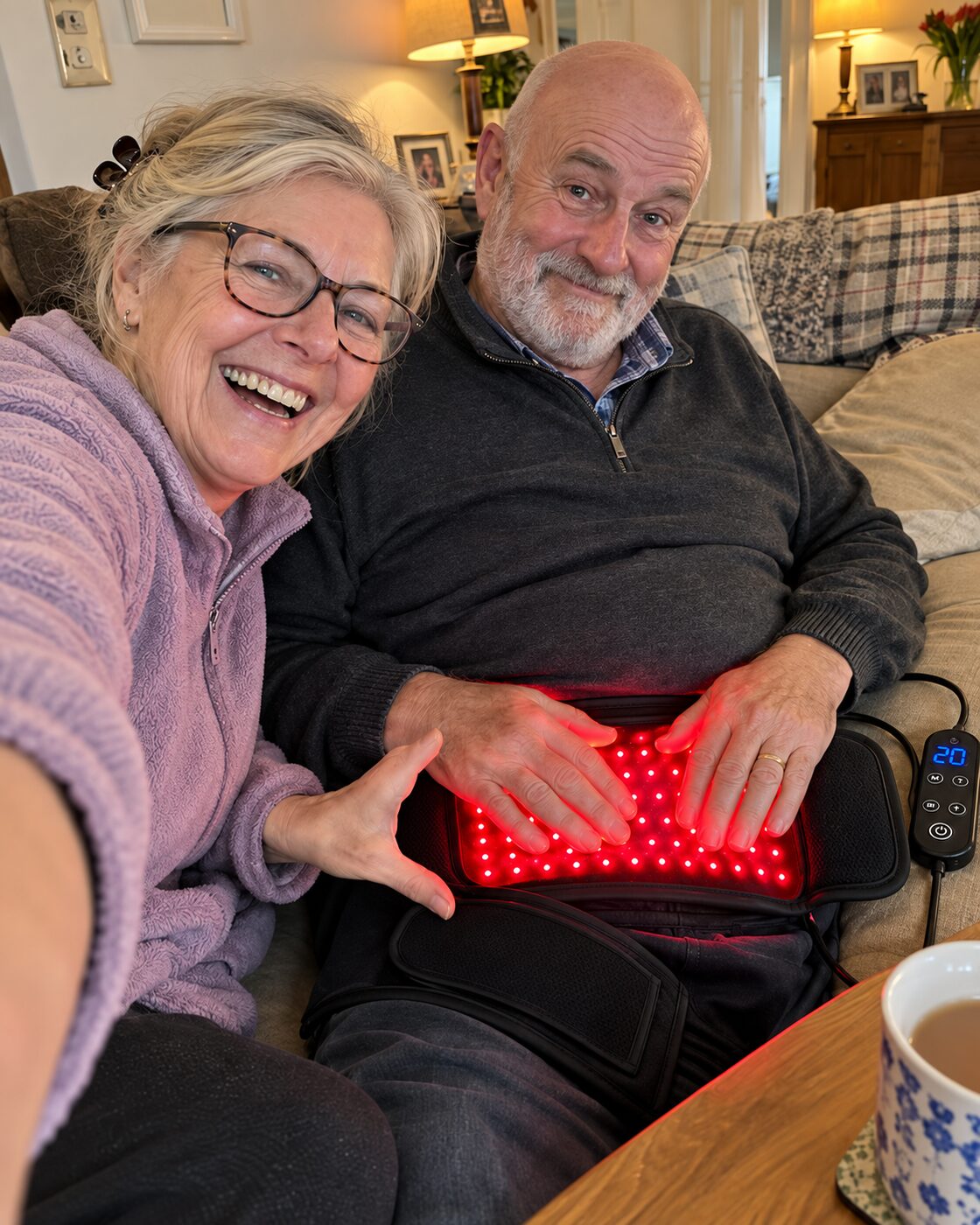
| LumaWrap | £139 once | Strap on, one button, 20 min | 660nm + 850nm, 90-day refund, 2-year warranty |
Prices are rough, typical UK ranges at the time of writing and vary between shops.
LumaWrap vs a heat pad or hot water bottle
| Heat pad | LumaWrap | |
|---|---|---|
| How it works | Warms the skin | Red and near-infrared light, with gentle warmth |
| When you feel it | Straight away | Gradually, over weeks of daily use |
| Hands-free | Usually | Yes, with a strap |
| Shut-off | Depends on the model | Automatic after 20 minutes |
Verdict: a heat pad is cheap and comforting. LumaWrap is for people who want to try light therapy as a daily routine. They are not either-or; many people use both.
LumaWrap vs pain-relief gels and tablets
Gels and tablets from the pharmacy are a common first step and can give short-term relief. They are medicines, so read the leaflet and ask your pharmacist or GP if you use them often or take other medicines. LumaWrap is not a medicine and does not replace anything your doctor has advised. If you use a gel, apply it after your LumaWrap session, not before, as it can block the light.
LumaWrap vs a TENS machine
| TENS | LumaWrap | |
|---|---|---|
| How it works | Small electrical pulses through stick-on pads | Light from LEDs in a soft wrap |
| Sensation | Tingling or buzzing | Gentle warmth |
| Ongoing costs | Replacement pads | None |
| Pacemaker or implant | Ask your GP first | Ask your GP first |
Verdict: TENS suits people who like a strong sensation during a painful spell. LumaWrap suits people who prefer something gentle and routine, with nothing sticky.
LumaWrap vs a cheap red light belt
Some low-cost belts are perfectly reasonable. Before you buy any belt, check:
- Wavelengths: are both 660nm red and 850nm near-infrared clearly listed?
- UK plug: does it come with a UK mains adaptor or run from USB?
- Timer: does it switch itself off after a set session?
- Returns: how long do you have, and who pays to send it back?
- Warranty and support: is there a UK contact if it stops working?
LumaWrap ticks all five: both wavelengths, UK adaptor and USB, 20-minute auto shut-off, a 90-day refund, and a 2-year warranty with UK email support. Read more in our guide to red light therapy belts in the UK.
LumaWrap vs clinic or salon light sessions
Some clinics and salons offer red light sessions. You get a trained person and professional equipment, which is a real advantage. The downside is cost and time: you pay per visit, and a course means several trips. Work it out for yourself — the price of one visit multiplied by the number of visits in a course — and compare it with £139 once for a wrap you can use every day at home.
Exercise and physiotherapy come first
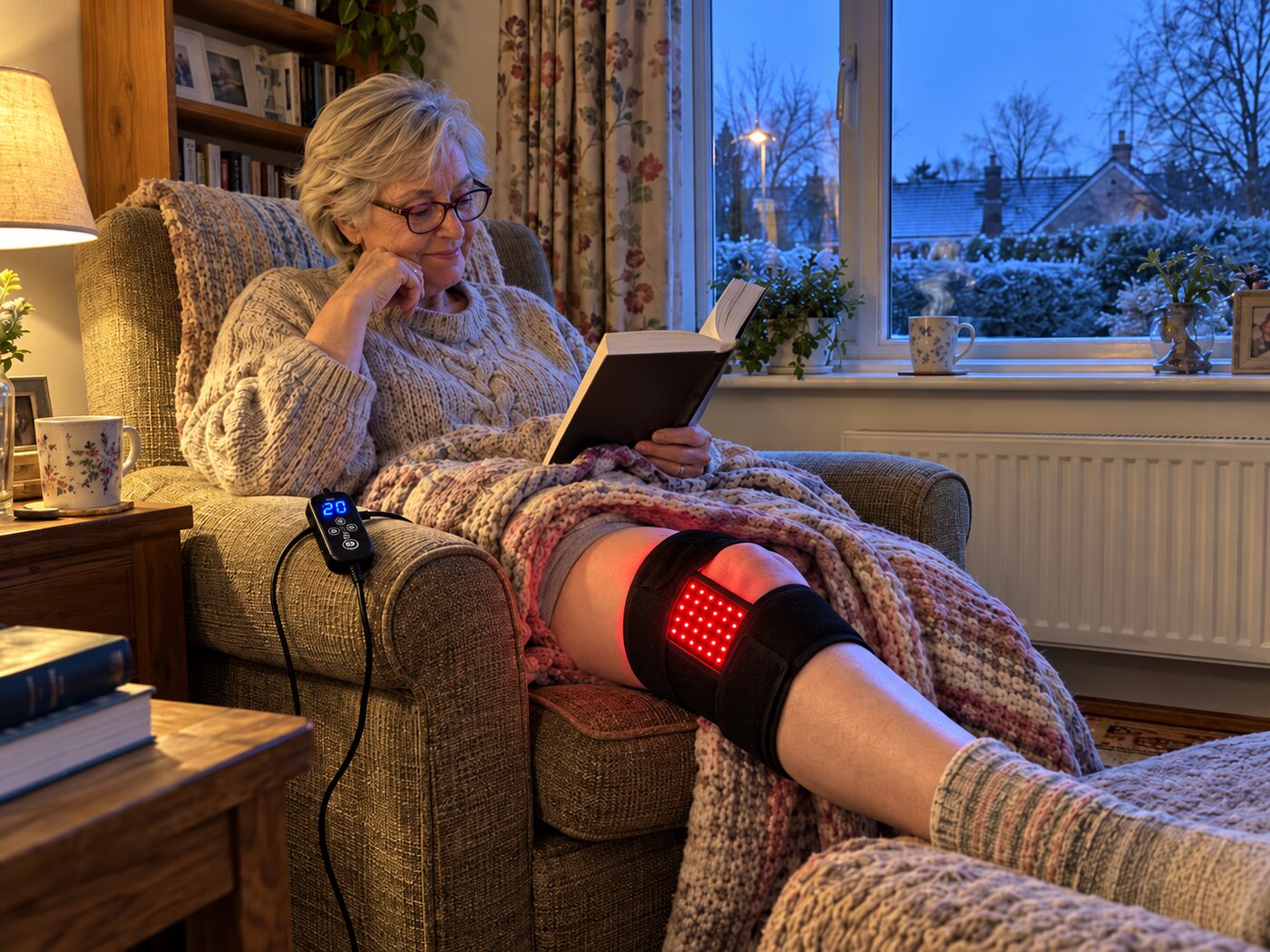
For most everyday joint and back aches, the NHS recommends staying active and, where needed, physiotherapy. Gentle movement, strength exercises and a healthy weight help many people. Any home device — LumaWrap included — is something to add alongside that, not instead of it.
Which should I choose?
| If you… | Consider |
|---|---|
| Want quick comfort tonight | A heat pad or hot water bottle |
| Have a painful flare-up | Pharmacy advice, or your GP if it is severe |
| Like a strong sensation and do not mind pads | A TENS machine |
| Want a hands-free daily habit at home | LumaWrap |
| Want a professional to check you | A physiotherapist or clinic |
Where LumaWrap is the wrong answer
- Sudden, severe or worsening pain, or pain after a fall — see your GP.
- If you want an instant result from a single session.
- If you are unlikely to use it most days for a few weeks.
- If you are pregnant, have a pacemaker or implant near the area, take light-sensitising medication, or have or have had cancer — ask your GP first.
What the research says about red light
Research on red and near-infrared light for aches is mixed. Some trials on knees and neck pain reported benefits, while studies on backs have found smaller or uncertain effects. We list the studies in the sources below. Read does red light therapy work? for the full picture.
Common questions
Is red light therapy better than a heat pad?+
They do different things. A heat pad warms the skin and can feel soothing straight away. Red and near-infrared light is thought to act on cells rather than simply warming them, and is used as a daily habit over weeks. Many people use both on different days.
Is red light therapy better than TENS?+
Neither is simply better. TENS uses small electrical pulses and is used during a painful spell; red light is used daily over several weeks. If you have a pacemaker or implant, speak to your GP before using either.
Can I use LumaWrap with pain-relief gel or tablets?+
Keep taking any medicine as advised by your GP or pharmacist. Do not put gel or cream on the skin before a LumaWrap session, as it can block the light — apply it afterwards instead.
Why not just buy a cheap red light belt?+
Some cheap belts are fine, but check what you are getting: whether both 660nm and 850nm are listed, whether it has a UK plug and an automatic shut-off, and how long the returns and warranty are.
Is LumaWrap cheaper than clinic sessions?+
Over time, usually. Clinics charge per visit and a course means several visits. LumaWrap is £139 once and you use it at home every day. A clinic does give you a trained person to check you, which a home device cannot.
Can LumaWrap replace physiotherapy?+
No. Exercise and physiotherapy advice come first for most joint and back aches. LumaWrap is something you can add alongside, not a replacement.
Which option works fastest?+
Heat pads and gels are the quickest to feel. Red light works gradually, if it works for you — give it four to six weeks.
What if LumaWrap is not right for me?+
Send it back within 90 days of delivery for a full refund.
Related reading
Sources and how we wrote this guide
We read the published research and summarise it in plain English, including the studies that found little or no effect. LumaWrap is a wellbeing device, not a medical treatment. If you have a health condition, speak to your GP first.
- 1.Efficacy of low-level laser therapy on pain and disability in knee osteoarthritis: systematic review and meta-analysis of randomised placebo-controlled trials — BMJ Open (Stausholm et al.), 2019.Across 22 placebo-controlled trials, light therapy at the recommended doses reduced knee pain compared with placebo, alongside exercise.
- 2.Efficacy of low-level laser therapy in the management of neck pain: a systematic review and meta-analysis — The Lancet (Chow et al.), 2009.Light therapy reduced neck pain straight after treatment and for up to 22 weeks in chronic neck pain, compared with placebo.
- 3.The effectiveness of low-level laser therapy for nonspecific chronic low back pain: a systematic review and meta-analysis — Arthritis Research & Therapy (Huang et al.), 2015.Across seven trials, pain scores were lower after light therapy than placebo, though disability and movement scores did not change significantly.
- 4.Mechanisms and applications of the anti-inflammatory effects of photobiomodulation — AIMS Biophysics (Hamblin, Harvard Medical School), 2017.Red and near-infrared light is absorbed in the cell's mitochondria; one of the most reproducible effects is an overall reduction in inflammation. Too much light can reverse the benefit.