Red light therapy for hip pain
Hips sit deeper than knees, so it is worth being clear about what a light wrap can realistically reach.
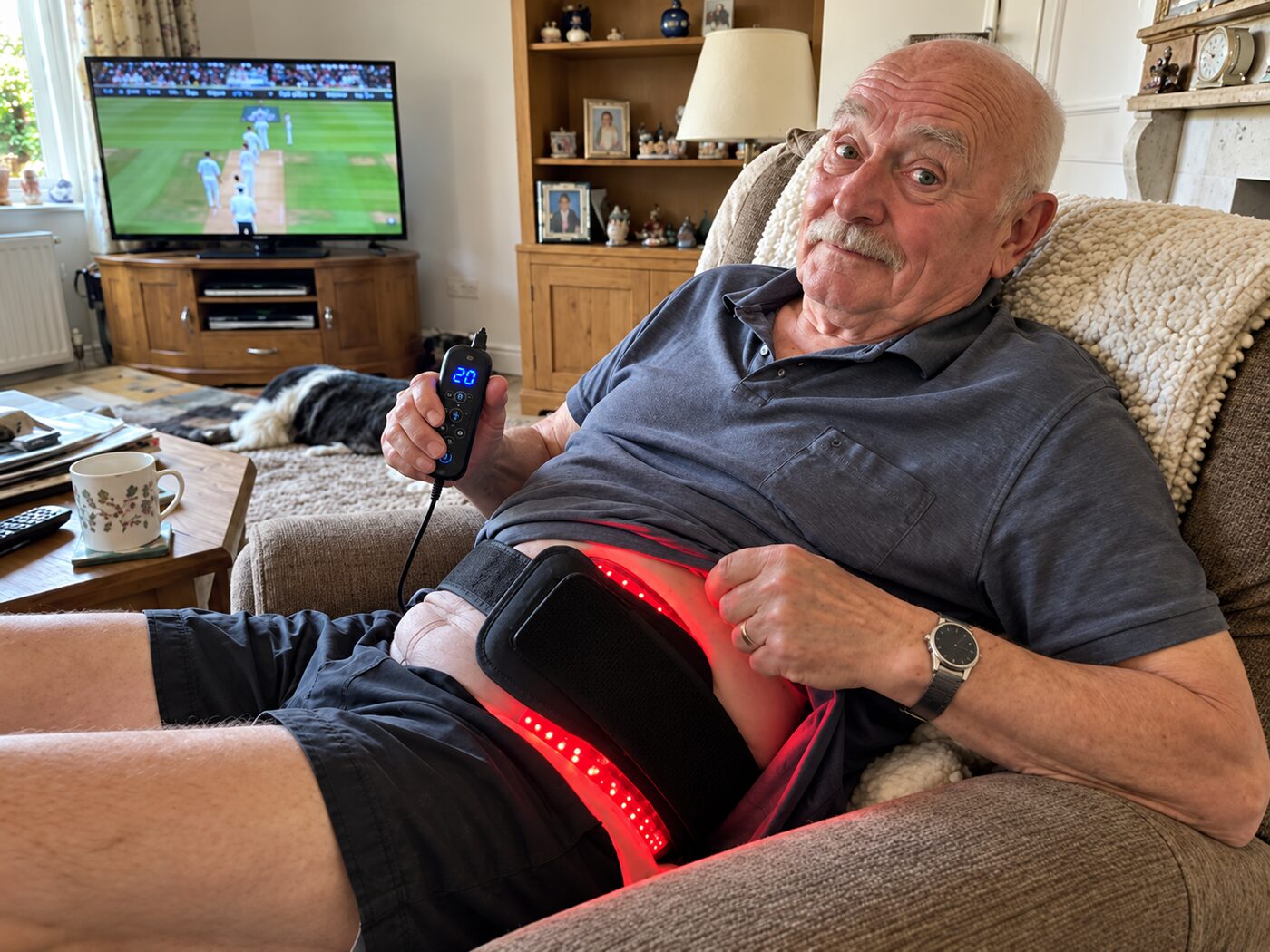
The honest bit about depth
Near-infrared light at 850nm travels around 4 to 5cm into tissue. On a knee that comfortably reaches the joint. On a hip it reaches the muscle, tendon and bursa around the joint, and on a heavier build it may not reach the joint capsule itself.
That is not a reason to skip it — a great deal of hip pain comes from the soft tissue on the outside of the joint rather than the cartilage inside it — but it is a reason to expect “this moves more easily” rather than “the joint has been rebuilt”.
Positioning
- Outer hip pain: place the panel over the bony point on the side of the hip and lie on your other side, or sit back in an armchair.
- Groin-side ache: bring the panel forward into the crease at the front of the hip.
- Buttock and upper thigh: fasten the wrap around the top of the thigh with the panel over the sore area.
Bare skin, twenty minutes, once a day.
Pairing it with movement
Hips do better when light therapy sits alongside gentle movement. A short walk or the stretches your physio gave you, done after the session while the area is warm, is a sensible habit.
See a GP if
- The hip gives way, locks, or you cannot bear weight on it
- The pain started after a fall
- The joint is hot, swollen or you have a fever
Common questions
Can red light therapy reach a hip joint?+
Near-infrared light at 850nm penetrates roughly 4 to 5cm, which reaches the soft tissue around the hip. On a deeper hip it may not reach the joint capsule itself, so expect the benefit to show up as easier movement and less surrounding tightness.
Where should the panel sit for hip pain?+
Over the bony point on the outer side of the hip, or slightly forward into the groin crease if the ache is felt there. Sit or lie on your side so the wrap stays put.
How long until a hip feels different?+
Most people notice easier movement before less pain, typically in the second week, with a clearer change between weeks four and six of daily twenty-minute use.