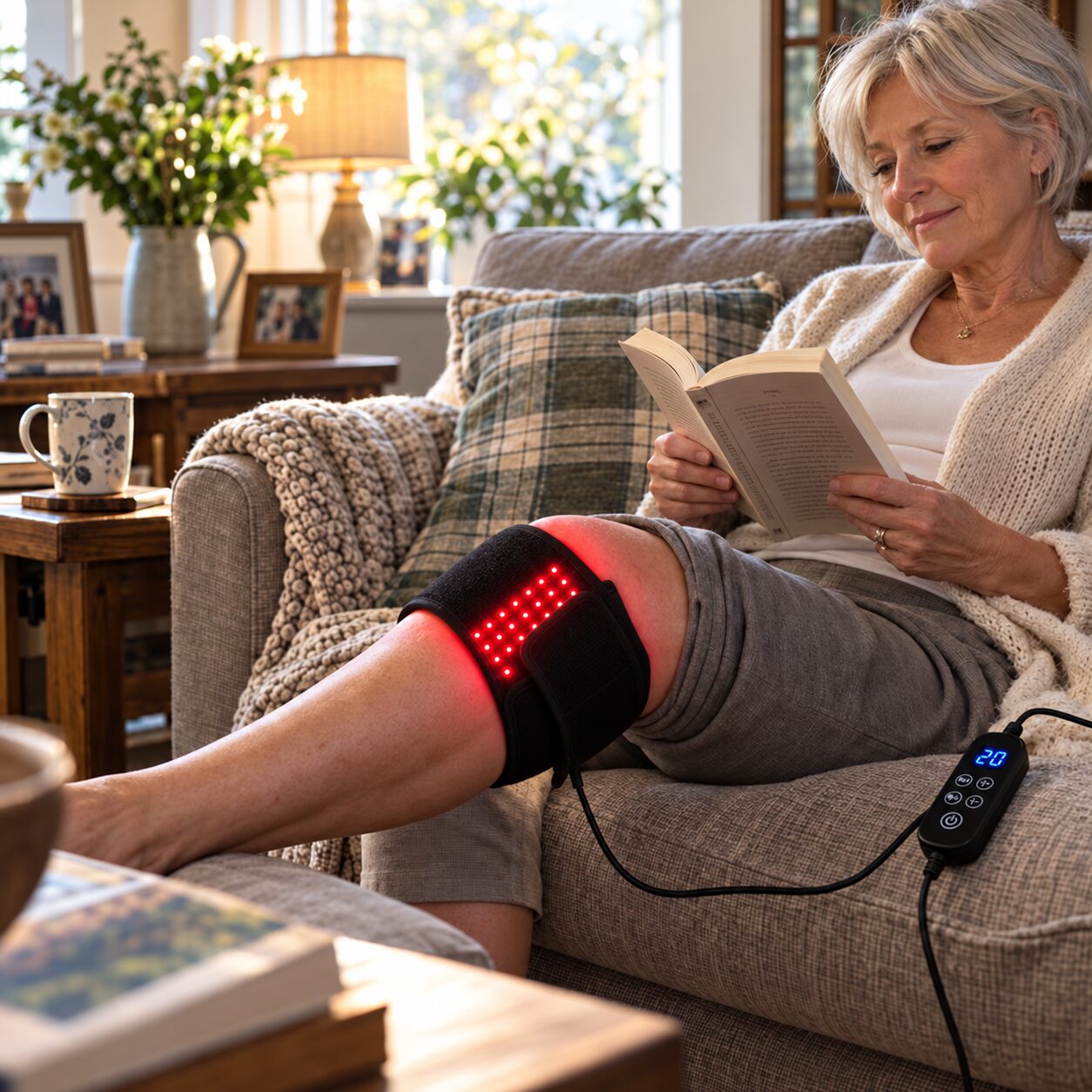
Clinic vs home: what actually differs
Clinic panels are more powerful and cost £30 to £80 a session. Home devices use the same red and near-infrared wavelengths at lower power, so you make up for it with short daily sessions. Over a month, daily home use often delivers more total light than a weekly clinic visit — at a fraction of the cost.
Which type of home device?
- Wraps and belts — strap around a knee, hip, back or shoulder. Hands-free, hold the lights against skin. Best for joint and muscle aches.
- Panels — stand in front of them. Cover a big area but you have to keep still at the right distance.
- Face masks — for skin, not joints.
- Handheld wands — small area, you have to hold them for the whole session.
What to check before buying
- Stated wavelengths — ideally both 660nm and 850nm
- An automatic timer so you cannot overdo it
- A UK seller with a clear returns period — at least 30 days, ideally 90
- No miracle claims: nothing reputable promises weight loss or cures
A simple home routine
- Pick a fixed time — after breakfast, or with the evening news.
- Strap the wrap on bare skin over the sore area.
- Press start. LumaWrap runs 20 minutes and switches itself off.
- Repeat daily for at least four to six weeks before judging.
Full instructions are in how to use LumaWrap.
Common questions
Can you do red light therapy at home?+
Yes. Home devices such as wraps, belts and panels use the same red (around 660nm) and near-infrared (around 850nm) wavelengths as clinic devices, at lower power, so you use them daily rather than once a week.
Do at-home red light therapy devices work?+
They can, provided the device uses the right wavelengths, sits against bare skin, and is used consistently for several weeks. Most disappointment comes from cheap devices with unstated wavelengths or from irregular use.
How often should I do red light therapy at home?+
Once a day for around 20 minutes on the area you want to treat is the most common routine. Doing more than that does not speed things up.
What is the best red light therapy device for home use?+
For aches in the knee, hip, back or shoulder, a wrap is usually easier than a panel because it holds the lights against the skin while you sit down. Panels suit larger areas and skin use.