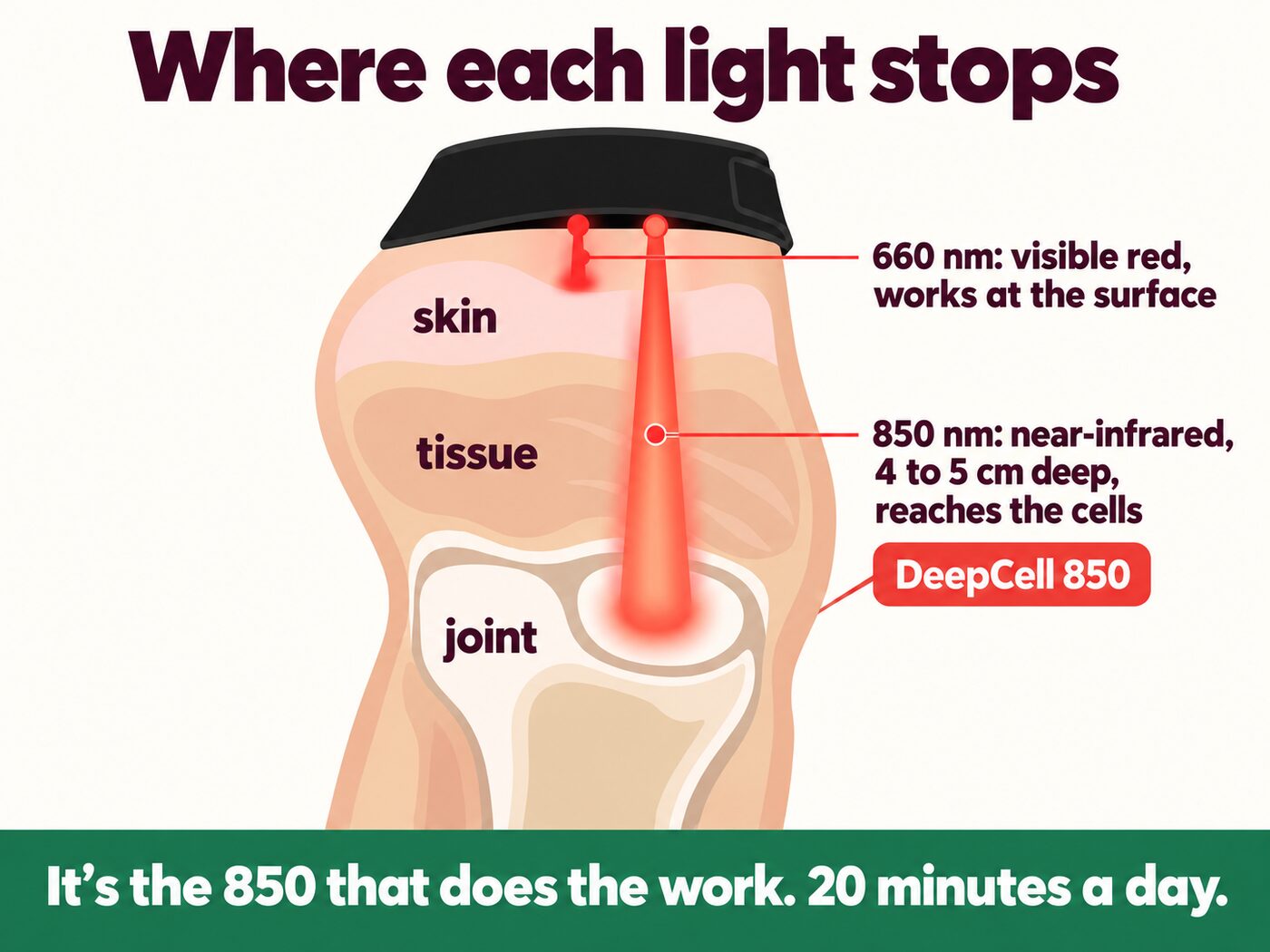
Three kinds of "infrared" people mix up
- Near-infrared (around 850nm) — used in therapy wraps and panels. Invisible, passes 4 to 5cm deep.
- Far-infrared — used in saunas and heat lamps. Mostly heat.
- Red light (around 660nm) — not infrared, but visible red, works nearer the skin.
Why combine red and near-infrared?
Aching joints involve both surface tissue and deeper structures. A dual-wavelength device covers both in one session. LumaWrap uses 660nm and 850nm together — details in 660nm vs 850nm.
Why you cannot see it working
With the wrap on, you will see the red glow but not the near-infrared. That is normal. A gentle warmth is the only sign — it is a side effect, not the treatment.
Common questions
What is infrared light therapy?+
It uses near-infrared light, usually around 810 to 850nm, which you cannot see. It passes deeper into the body than visible red light, which is why it is used for joints and muscles.
Is infrared light therapy the same as red light therapy?+
They are close cousins. Red light (around 660nm) is visible and works nearer the surface; near-infrared (around 850nm) is invisible and goes deeper. Many devices, including LumaWrap, combine both.
Is infrared the same as an infrared sauna?+
No. Saunas mostly use far-infrared to heat the body. Near-infrared therapy is about the light being absorbed, not about getting hot.